The groundbreaking history of Cornell’s Legal Information Institute (LII [1]) and the resources it makes available (for instance the Supreme Court decisions [2]) are too well known to Slaw regulars to detail, but it is puzzling how absent the LII seems to be from the consciousness of other OA law projects. The most recent example is the release of CC US court decisions by Public.Resource.org [3]. In a press release [4] the CEO of the group Carl Malamud claims that “The U.S. judiciary has allowed their entire work product to be locked up behind a cash register” which is misleading.
Another good example comes from John Markoff of the NYT, who wrote in 2007, again in reference to public.resource.org,
Last week, Mr. Malamud began using advanced computer scanning technology to copy decisions, which have been available only in law libraries or via subscription from the Thomson West unit of the Canadian publishing conglomerate Thomson, and LexisNexis, a division of Reed Elsevier, based in London.
The effect of this lacuna is obvious from the discussion that follows. Here is a good example from Boing Boing [5].
Not that LII should be referenced in every press release, but if even the experts in OA law are failing to situate their projects in a helpful way, it makes me wonder whether the information will be available to the public in a useful form. Complete access to all a court’s decisions has its pitfalls without the context necessary to make good use of the materials. Taking a look at the interface for gaining access to the Public.Resource.org release [6] makes it more clear than the press release does that this is a resource for programmers, not for the public. But will programmers be able to distinguish between the parts of that law that are still active, and those parts that are now superceded? How to ensure that all or even most projects using these materials are even aware that this is an issue? Looking at the ‘known bugs’ notice in the Federal materials’ readme [7]file, it is clear that there are non-trivial issues in the basic markup of the data, but there is nothing on the site linking to basic information about how case law is structured and used in the US.
Providing context is actually one of the LII’s next big directions, and to do so you need to know who is using, or might use, the materials. Tom Bruce and the LII are looking towards this. As they indicate on their website under Future Plans [8], they are
Undertaking a three year plan to explore integrated editorial and software strategies for facilitating the use and understanding of law materials by those who are not expert researchers of U.S. legal documents – including students, professionals from other fields heavily touched by law, lawyers and judges from outside the U.S., and ordinary citizens
And is the public good effectuated by access balanced against the privacy, monetary, and information overload costs? Such considerations are at play in Peter Martin’s 2008 paper Online Access to Court Records – from Documents to Data, Particulars to Patterns.
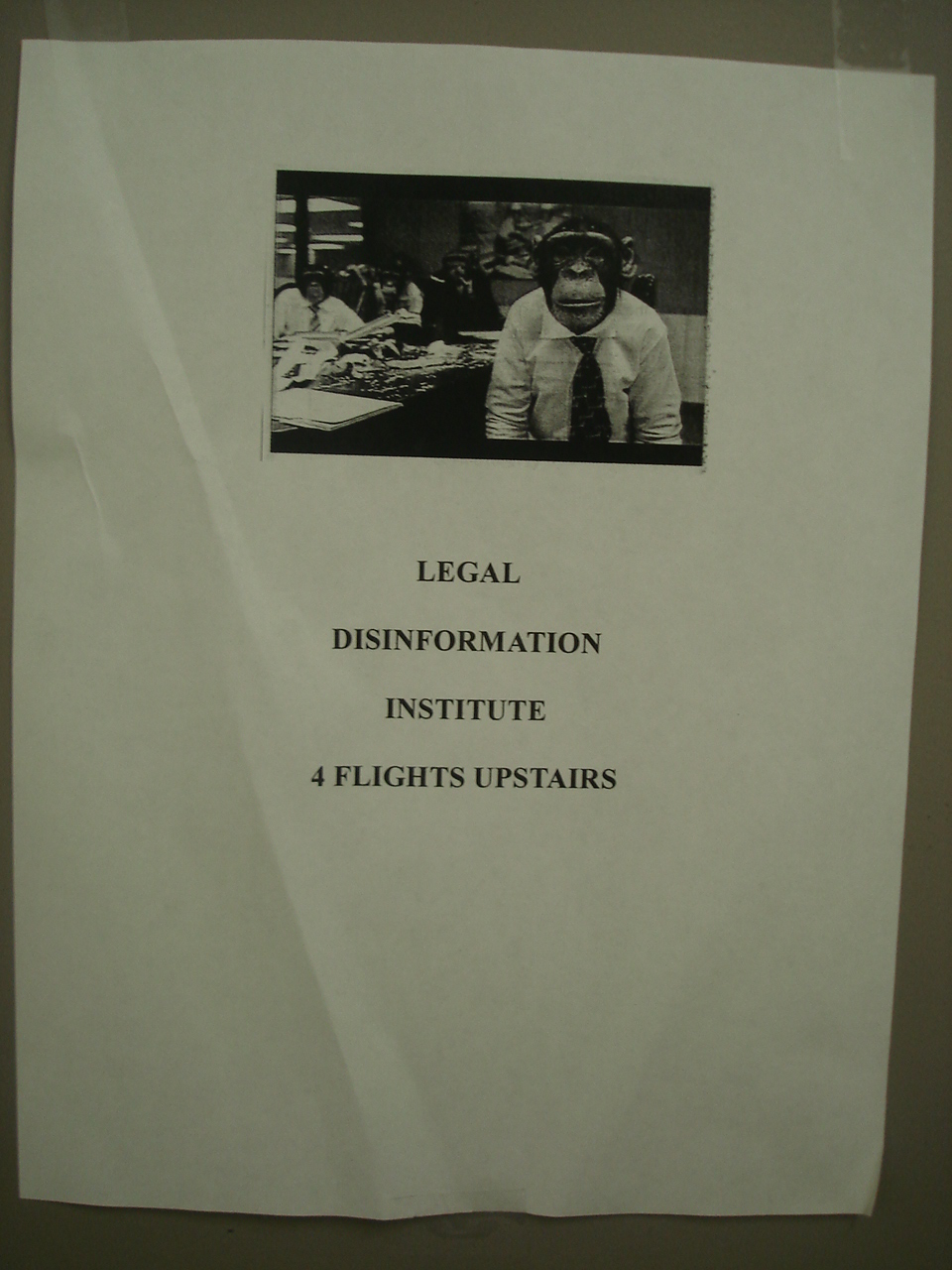
But now to the fun bits. It was a pleasure to sit down with Tom Bruce and his staff to find out a bit more about their plans and current projects. As a bonus, I got a tour of their facilities on the top floor of Myron Taylor Hall. Here’s the tip off to any law students that happen to wander near:
And here are a couple snaps of the servers
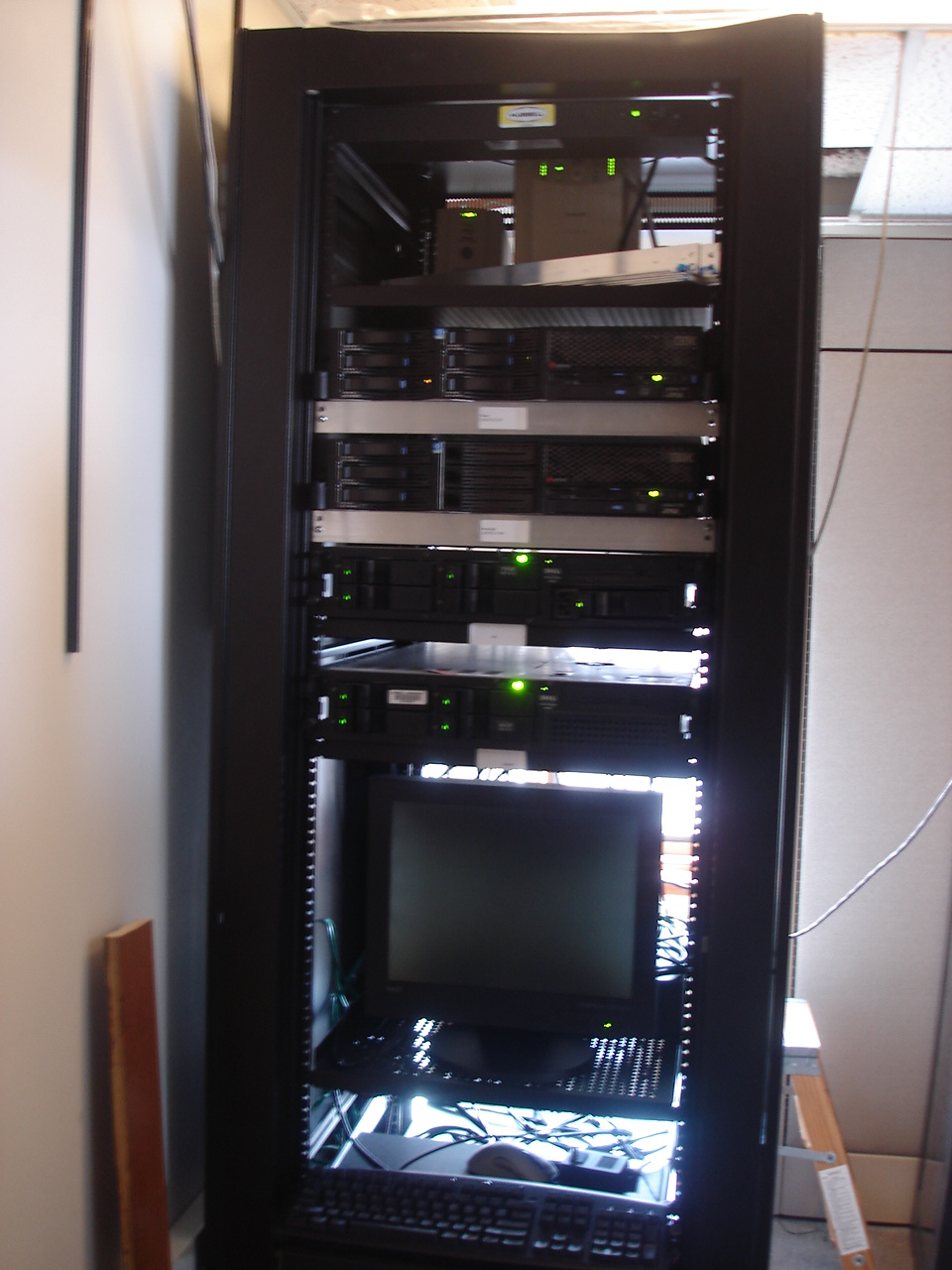
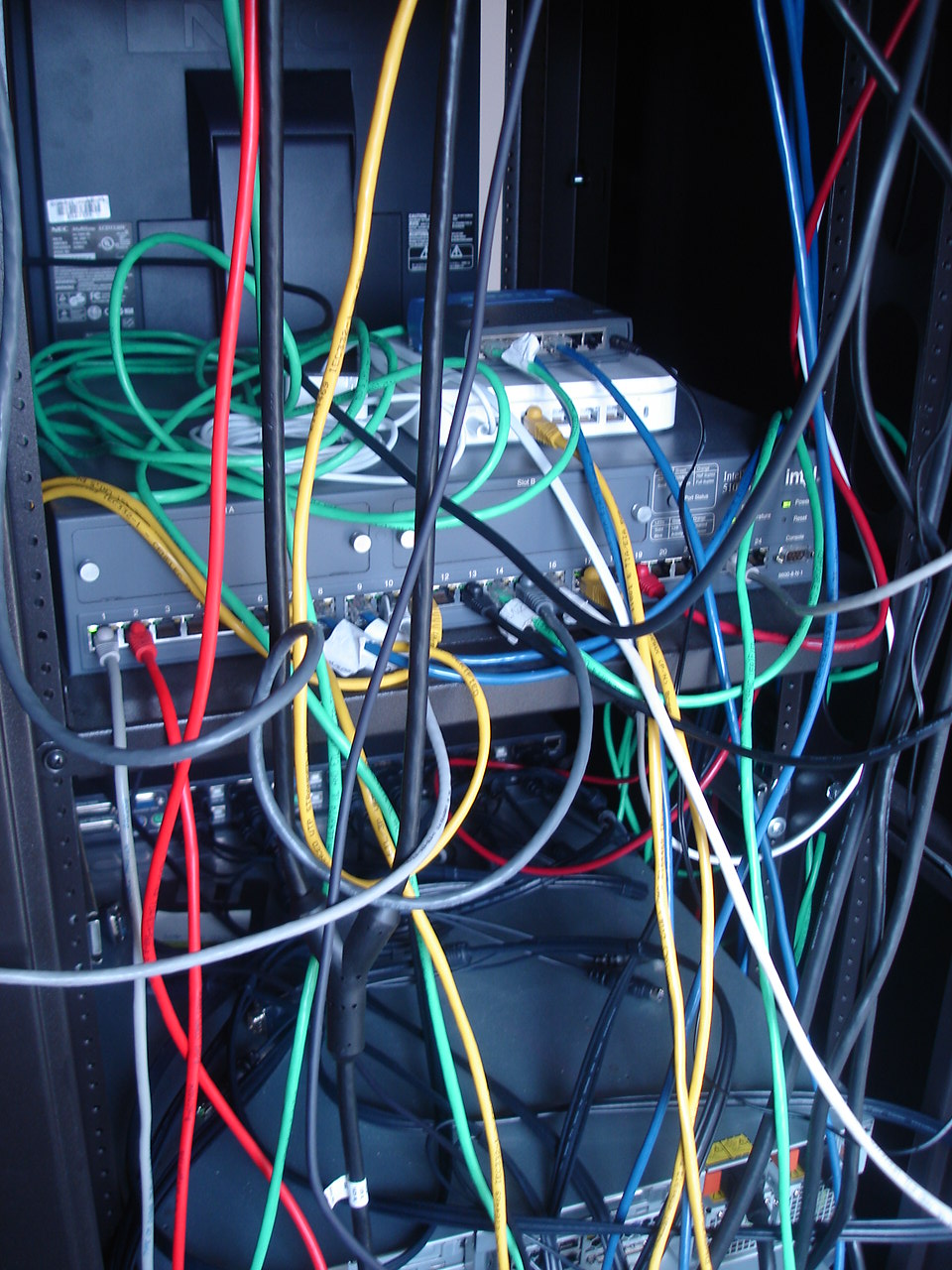
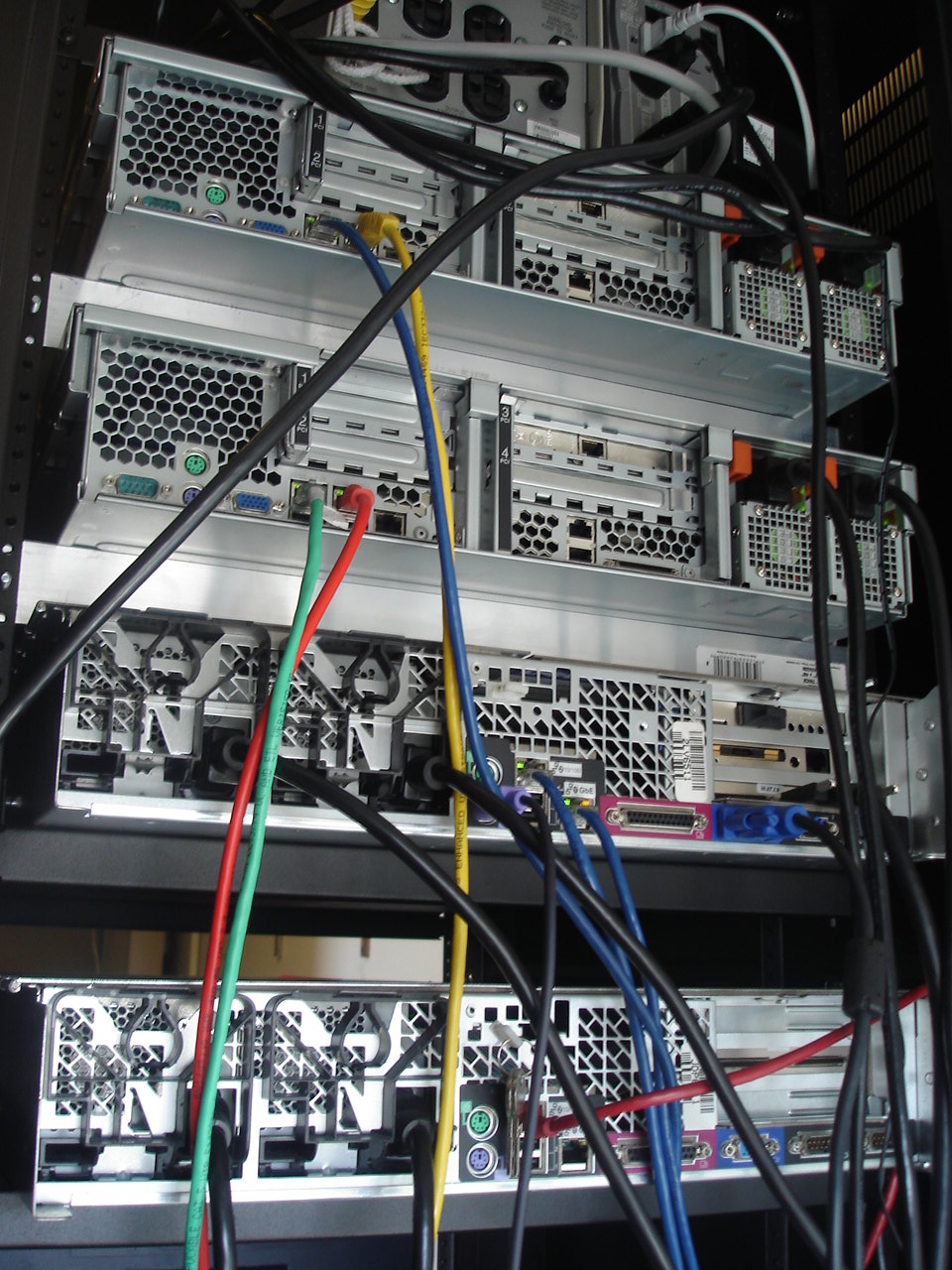
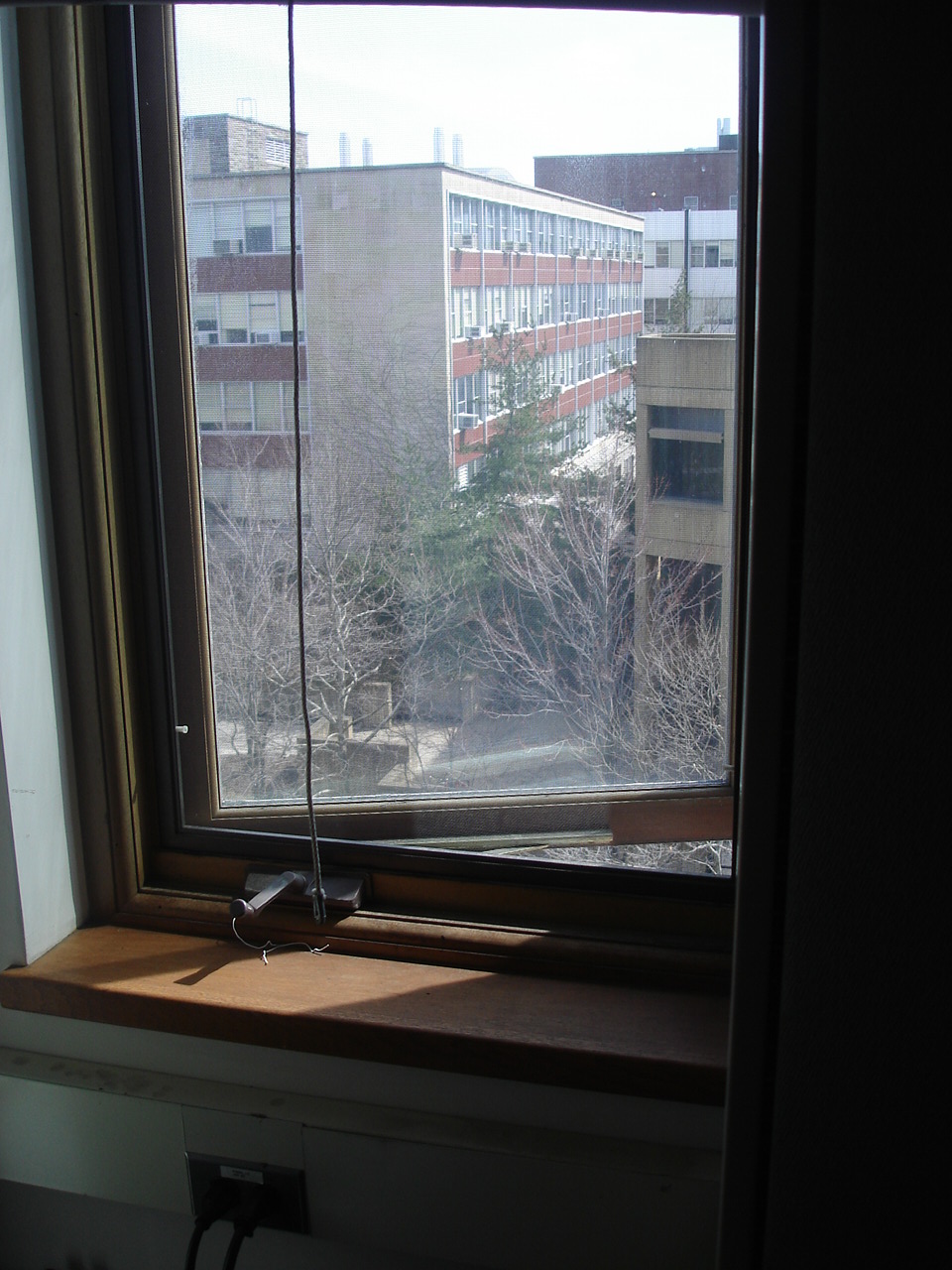
which are kept in a nice cool closet, served by this fully adjustable atmospheric ambiance control system.
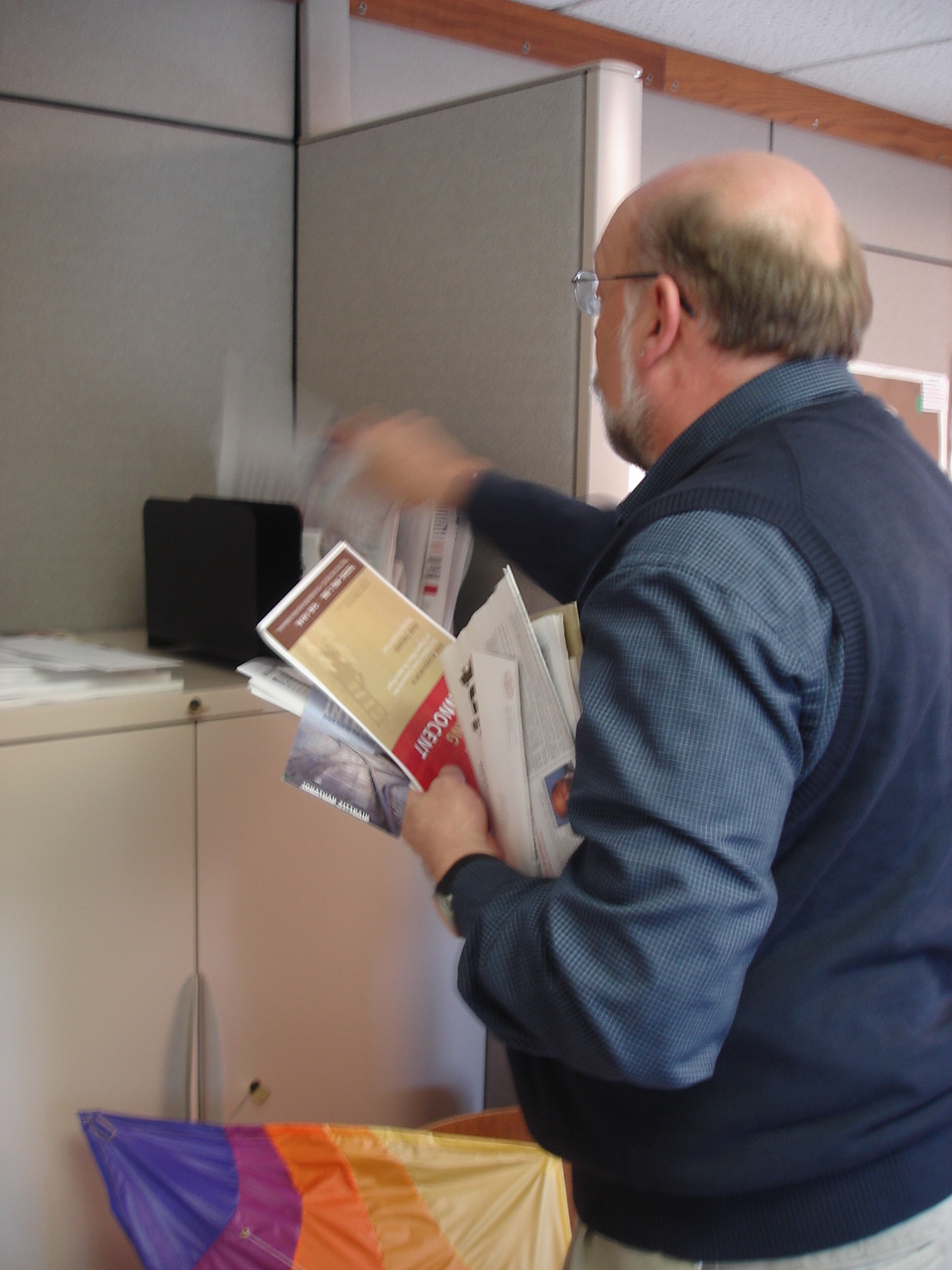
And here is Tom continuing his efforts to share information effectively: