

Digitization at Cornell
My time at Cornell is flying by ((My first week was too busy to allow time to post, but I have several items in the works)), and I’ve put together lots of notes on the law library. However, today I’m going to post about how Cornell University Libraries has developed a wonderful system for creating digital resources. The Digital Initiatives page provides access to the their many projects and partnerships. Central to the operation is the Digital Consulting and Production Services unit (DCAPS).
DCAPS has developed the expertise to bring a project from feasibility studies through grant writing and project management to implementation. On a partially cost-recovery basis, the unit coordinates with the library preservation and IT departments to partner with university and off-campus clients, and also suggests other commercial services that can contribute cost-effective services appropriate to the project.
It is a great way to move forward on the great variety and diverse challenges of digitizing information. From rare books to student newspapers, the metadata needs, best technology platforms, and copyright considerations vary widely, and centralizing the expertise just makes sense.
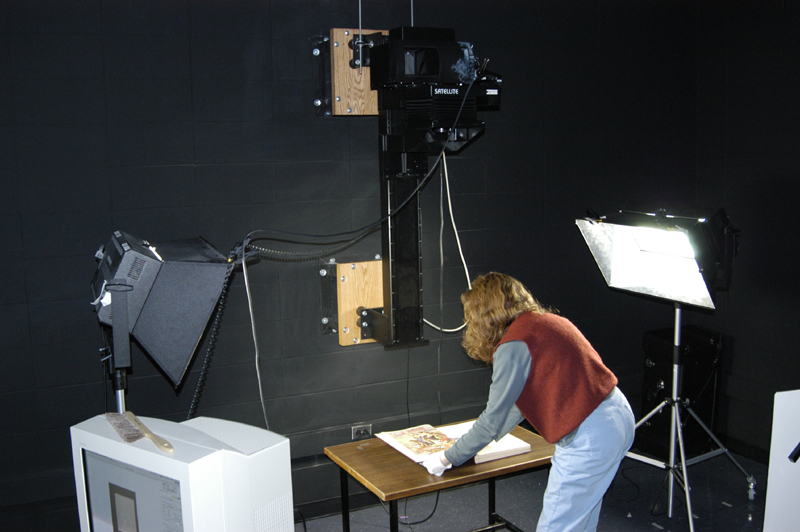
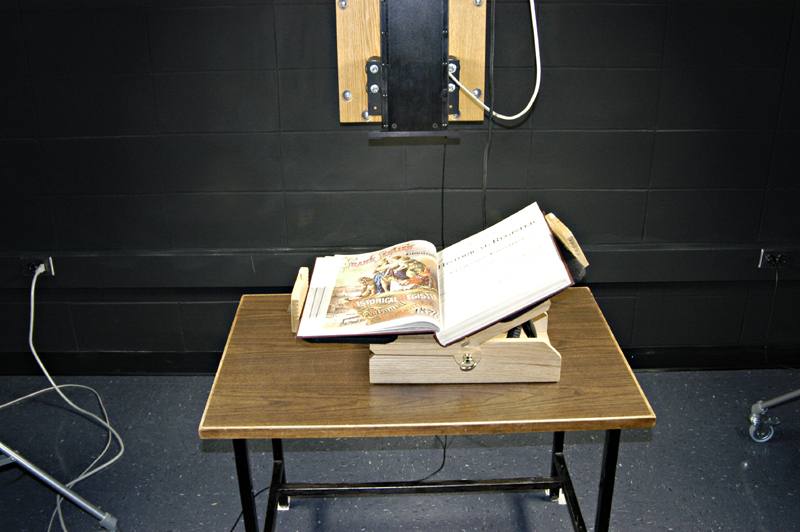
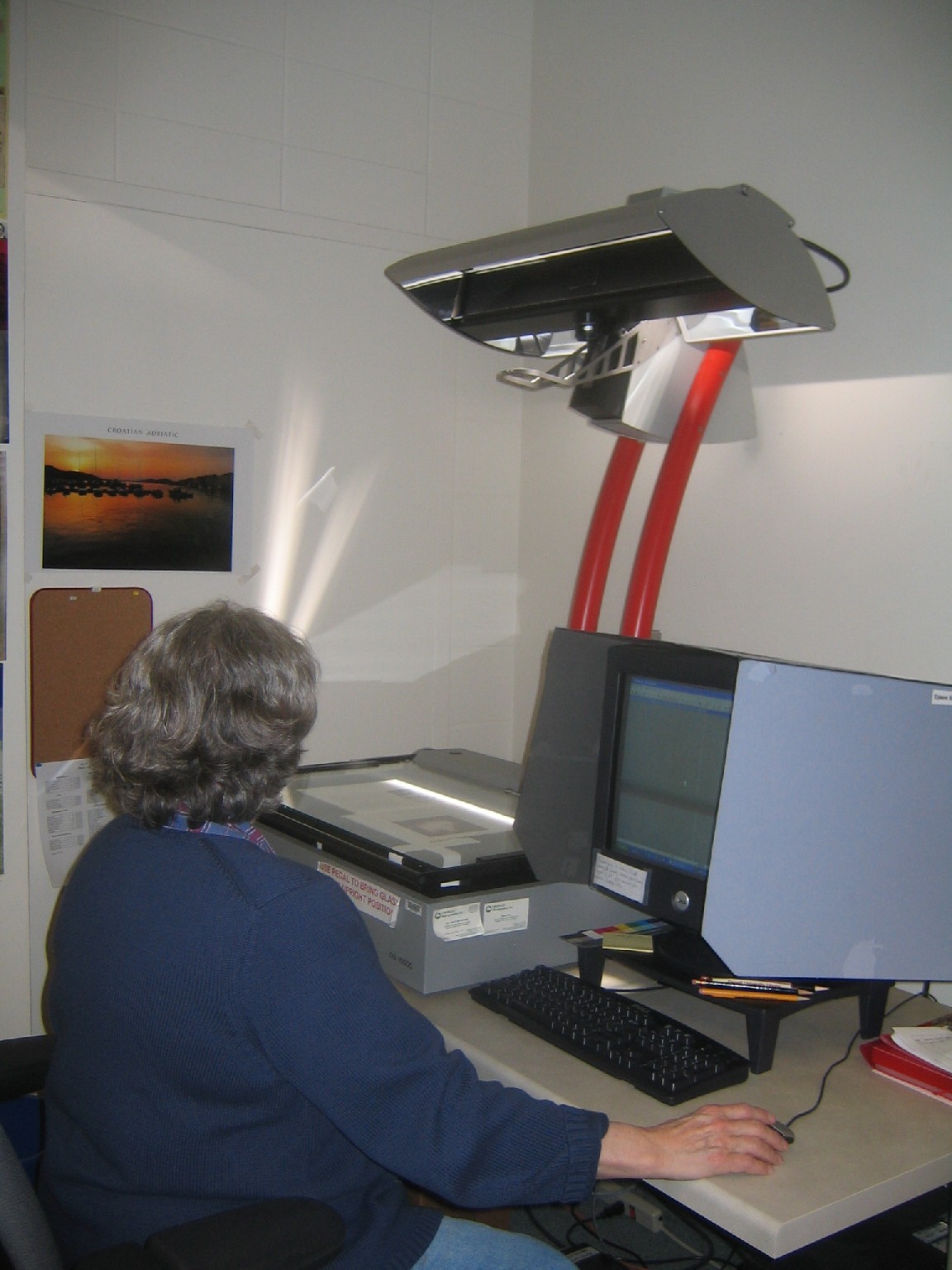
Apart from that, the machinery needed to create digital versions of photographs, paintings, rare books, and unique legal documents is not cheap, nor is the expertise to use them well. Here’s a look at a couple of the fantastic tools available at DCAPS.
Rare books scanner
img_0582.JPG
[I’m having trouble with this image’s thumbnail, for unknown reasons]
Large-format digital photog.
Preservation department
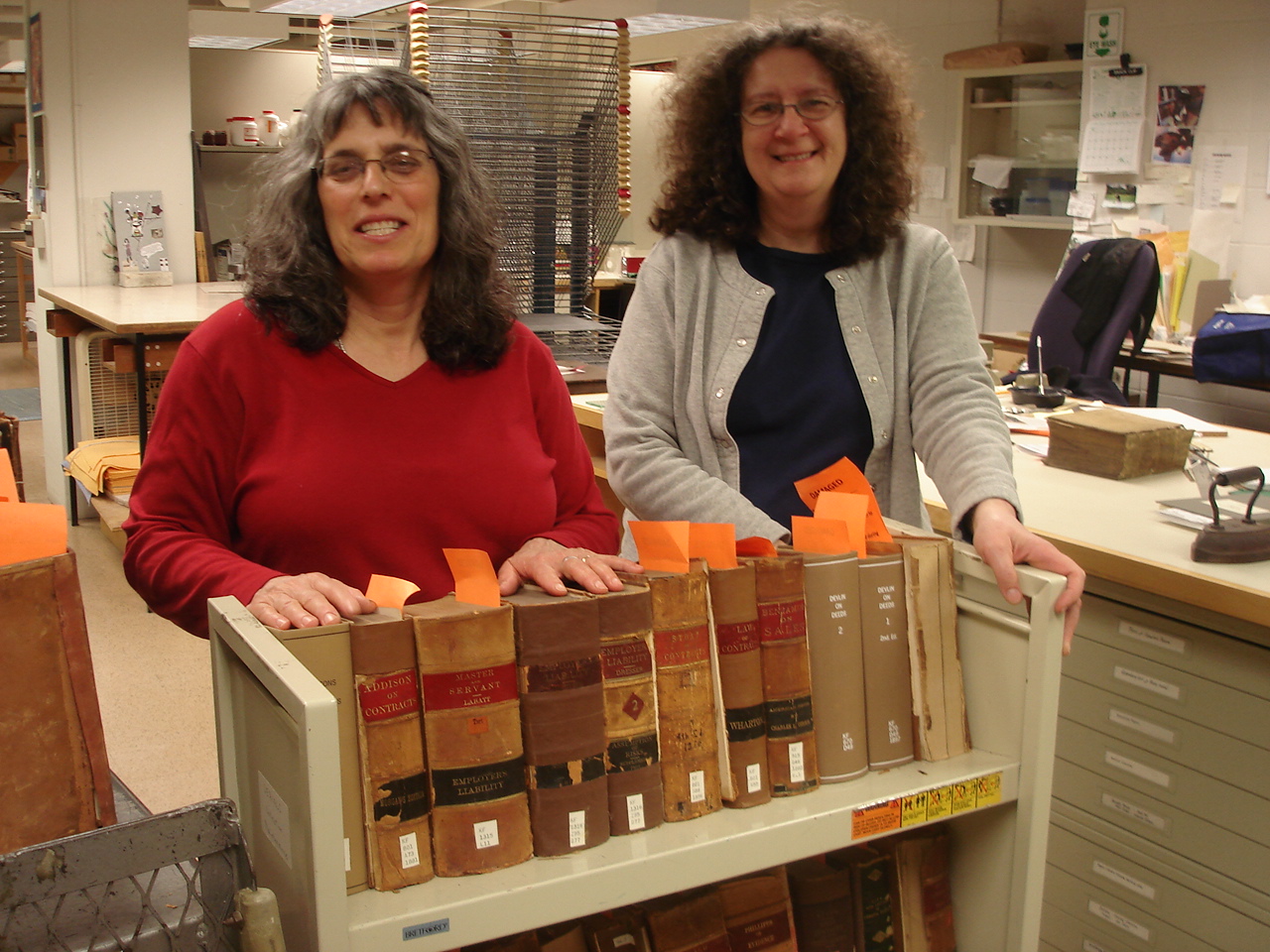
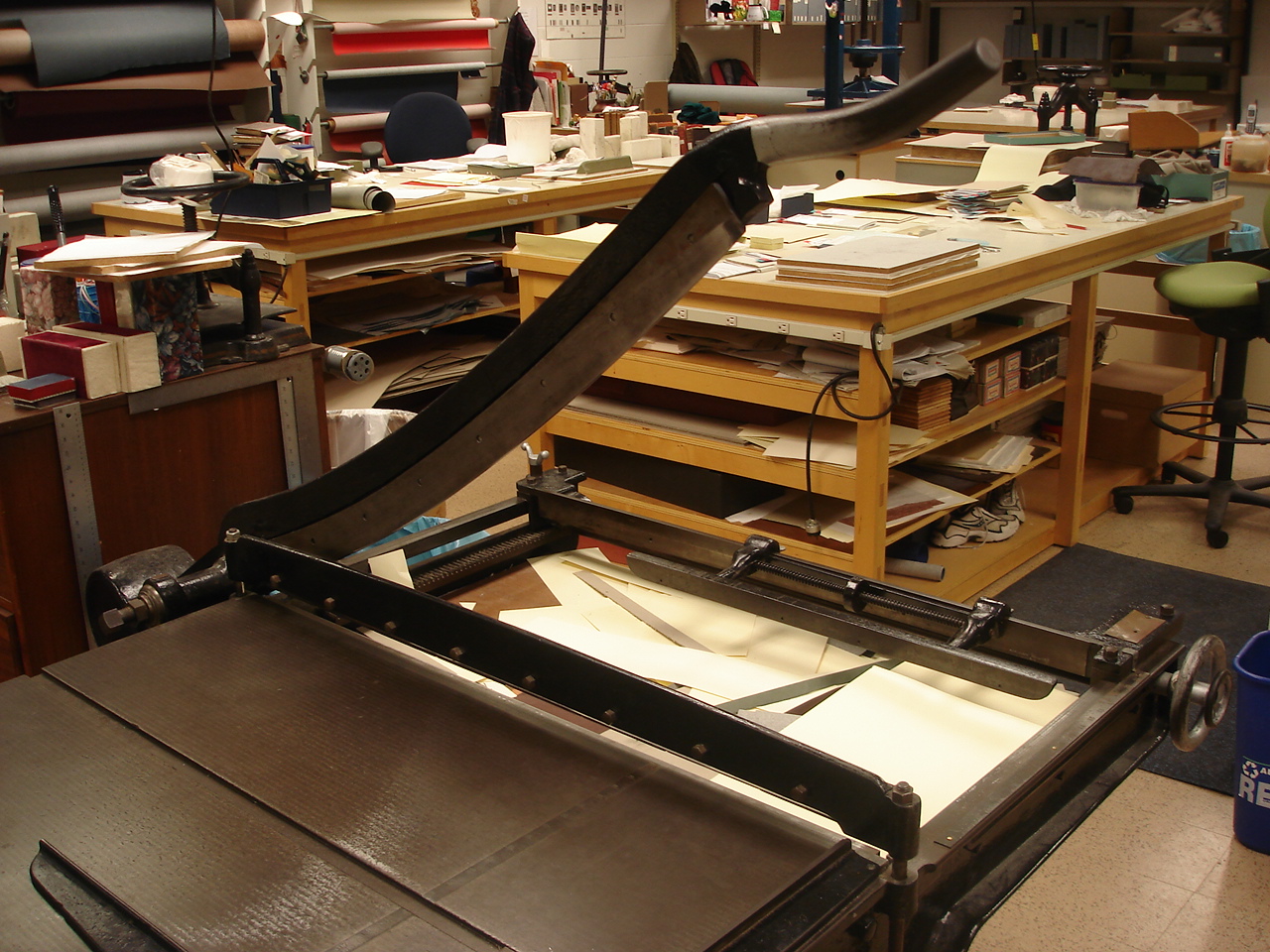
Integral to the success of DCAPS is the ability to draw on the experience of the Preservation unit of the library in evaluating how to treat a given group of resources. As an extra treat for Slaw, I made my case to Barbara Berger Eden (Director, Preservation and Collection Maintenance) and was allowed to take a few photos of the main workroom and some of the technology they use to treat books right. Though this sort of machinery and craftsmanship may appear more commonly in blogs under the steampunk banner, the whimsy is downplayed in this workplace.
Here is Barbara and the Book Conservator, Michele Brown
Here is a board shear,
the hand tools and materials of a conservator,

and a book press.
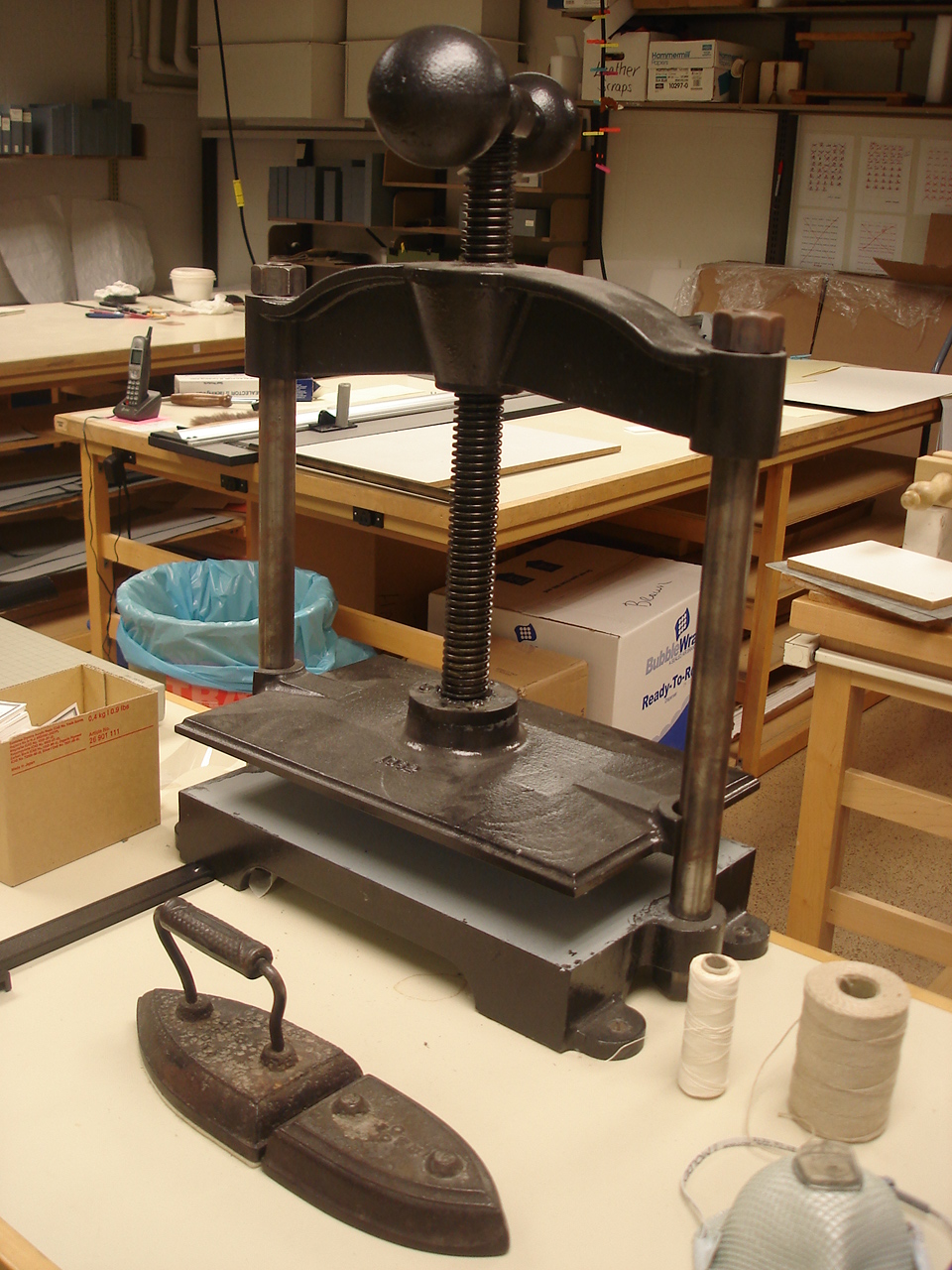
Also of great interest to me is the Library’s manner of treating new materials. Rather than spending extra money for hard bindings that are often of questionable quality, the library buys wherever possible soft covers and sends then to the stiffening unit. There soft covers are given a binding reinforcement and a thin carboard backing on the interior,

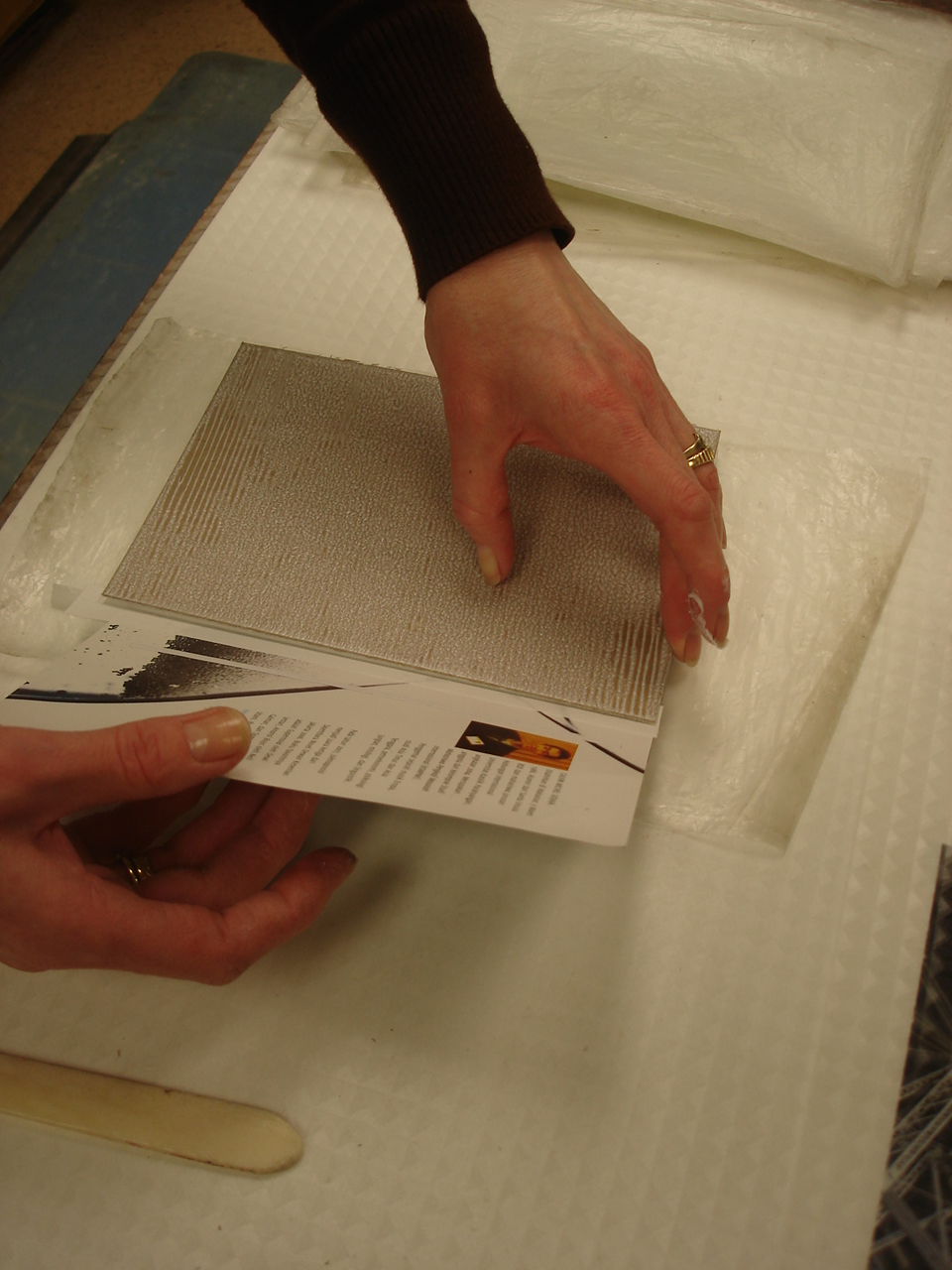
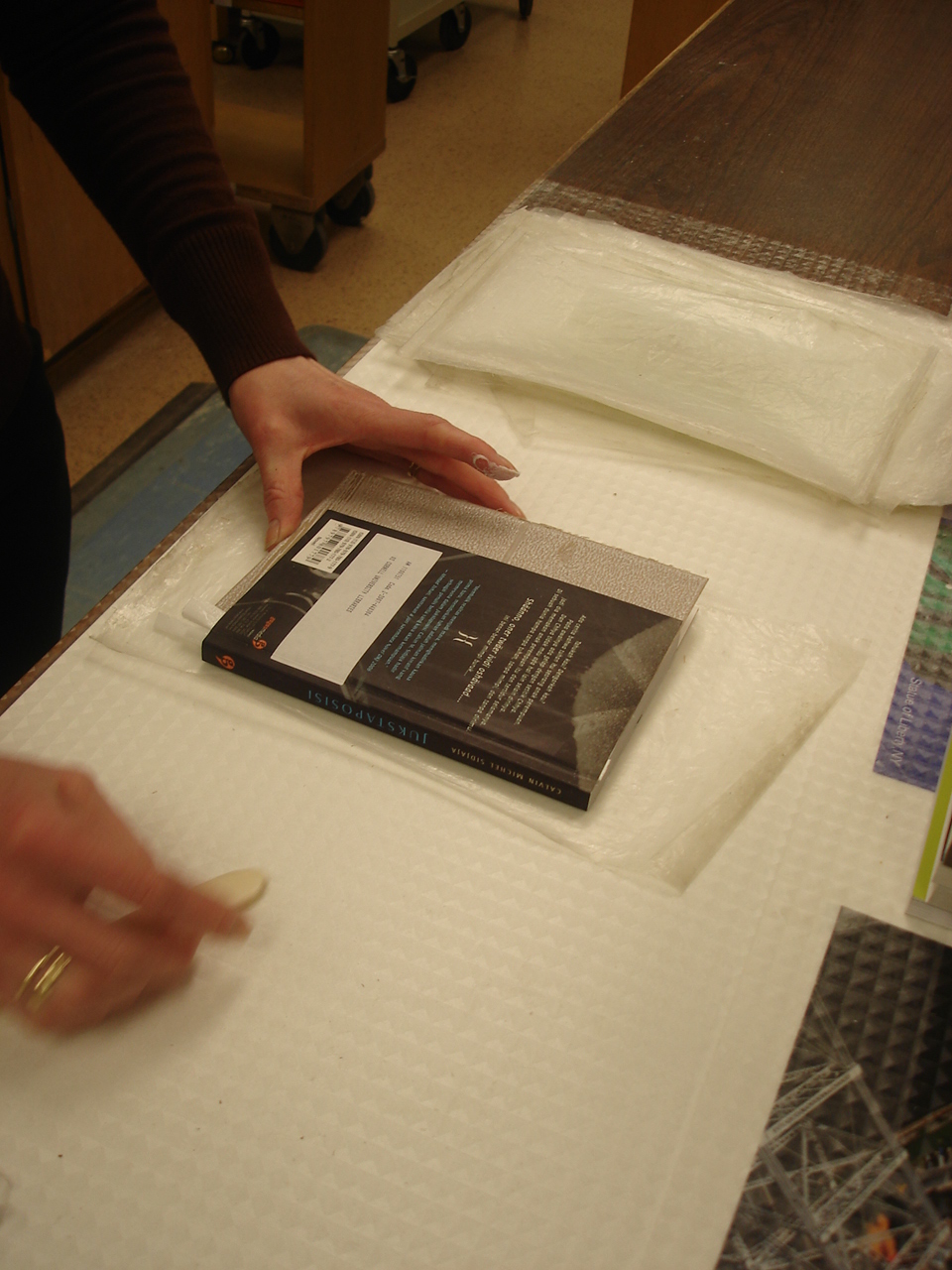
which is then trimmed with this guillotine:

This preserves the design of the covers, extends, the life of the book, and does so at a reduced costs that keeps expertise and quality control within the university.
Finally, I admire the library’s decisions on binding periodicals, opting for a quarter-buckram flush binding:
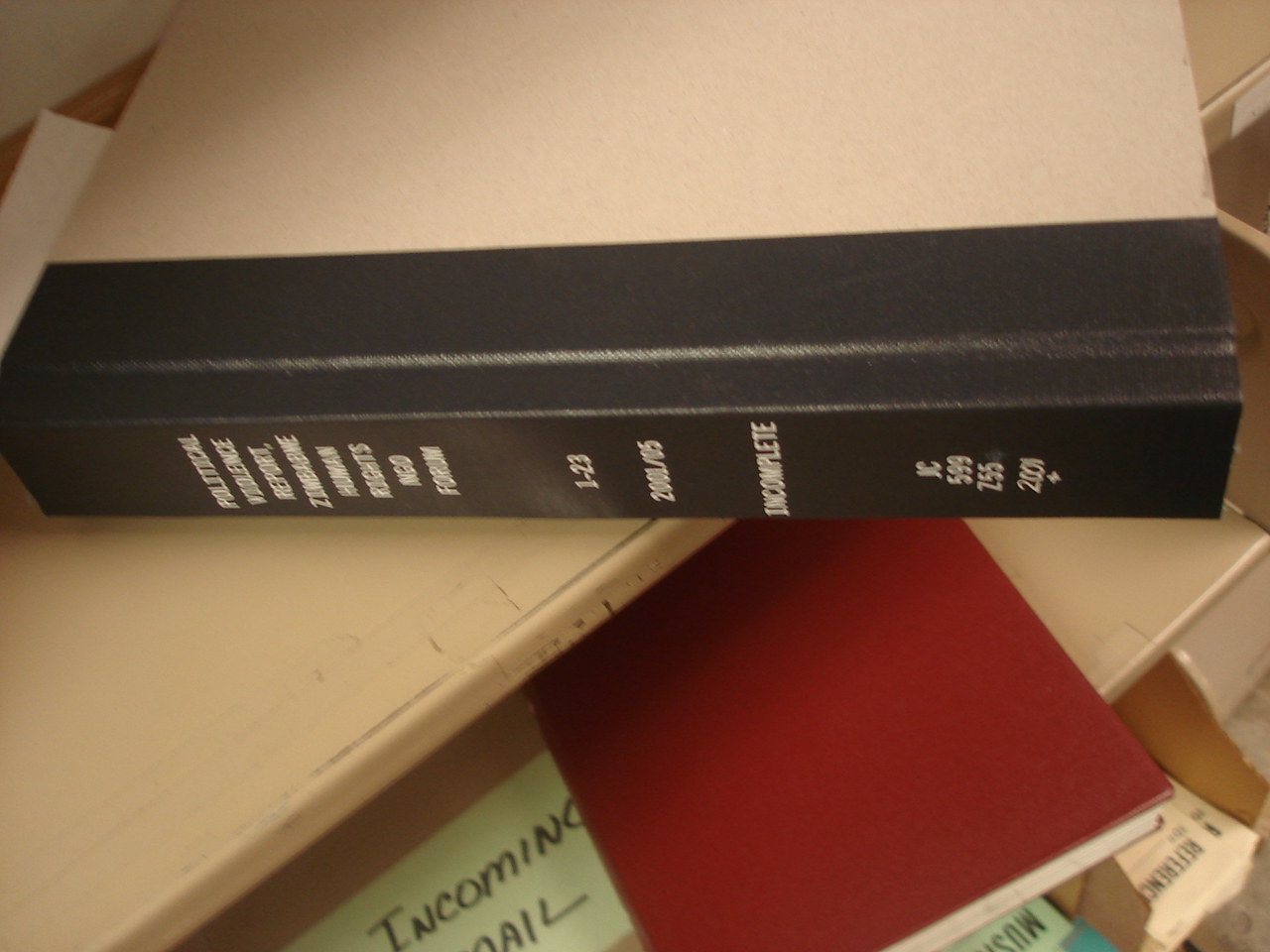
the result is a book that stands well,

lies open (reducing the likelihood of damage),
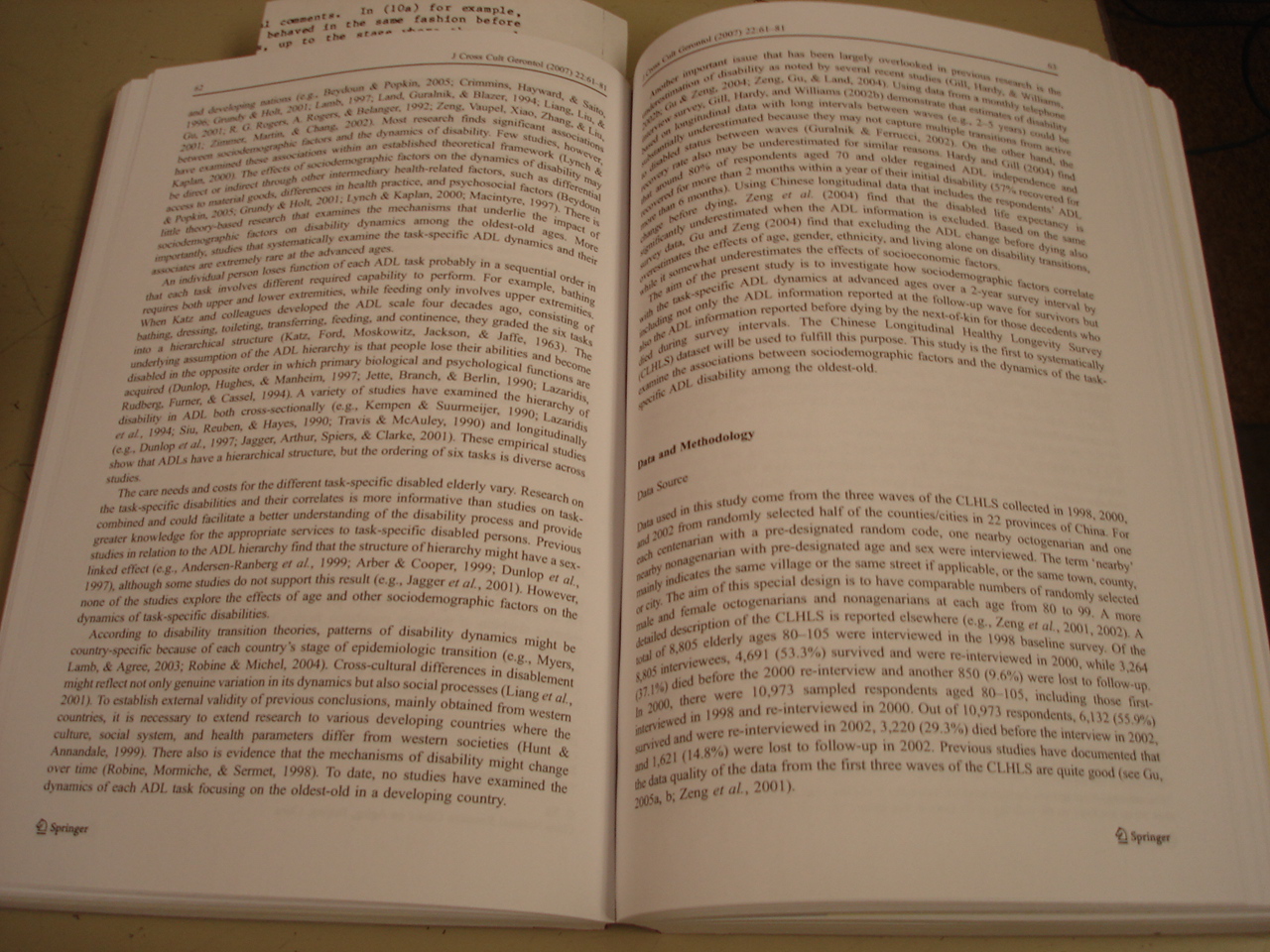
and, again, redirects resources to better uses.


Comments are closed.