

“Sympathies” Alone Insufficient to Form Terrorist Plot
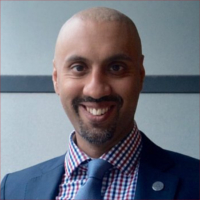
An Ontario pathologist who was arrested on terrorism charges was acquitted today in R. v. Sher.
Dr. Khurrum Sher, a graduate of McGill University who was working at St. Thomas Elgin General Hospital in St. Thomas, Ont., visited the home of his co-accused on July 20, 2010. During this visit, his host and another guest engaged in a protracted discussion about violent terrorist activity.
The accused was present throughout the discussion, did not appear to vigorously object to their plans, and at its conclusion appears to pledge his allegiance to them. He was friends with the host of the home, and shared an interest in sports and geopolitical issues with him. But he had only met the other person present on this single occasion, and never met him again following.
The police fortunately had the other parties under surveillance, including over 80,000 interceptions, and there was no dispute about their involvement with the plot. Justice Hackland applied R. v. Carter, [1982]1 SCR 938 to admit the surveillance under the co-conspirator exception to the hearsay rule,
For a conspiracy trial that involves three or more conspirators, at the first stage of the trial, the Crown must establish the existence of the conspiracy charged. At the second stage, the Crown must establish probable membership of the accused in the conspiracy. At the third stage, the Crown must establish actual membership of the accused in the conspiracy.
[as described in R. v. Chang, [2008] B.C.J. No. 322 at para 364]
A conspiracy can exist even where fixed objectives and specific times are lacking, as long as they agree on an objective. The Supreme Court of Canada’s ruling in R. v. Khawaja, [2012] 3 SCR 555, required motive to create the requisite mental element for terrorism charges.
The main question was the role of the physician who was present in this home on this single instance while these discussions transpired. The credibility of this physician was the central issue for the case. The accused’s credibility was assessed in light of R. v. W. (D.), [ 1991] 1 S.C.R. 742 and R. v. Cyr, 2012 ONCA 919.
Justice Hackland carefully reviewed the evidence detailing the relationship of accused with the parties. He rejected the accused’s position that the meeting was incidental and intended to provide consolation for the host’s mother who had recently deceased. He rejected the accused’s position that he did not have an interest in violent terrorism. He also rejected the accused’s evidence about the meeting in question.
Where Justice Hackland did give pause is where the accused claimed he did not genuinely or sincerely intend to join the group or have future dealings with them.
However, Justice Hackland made much about the protracted nature of the conversation, and the fact that the accused was very tired due to travel prior to the meeting,
[48] … In my view it would not have been inconsistent with the tenor and content of this 80 minute meeting for the accused to have said at its conclusion that he would like to give further thought to whether he would participate in the council group… As of this point as the meeting concluded, there was no plan of action for the group and no associated timing for any activities… The important question arises as to whether the accused seriously considered or indeed had time to reflect on what he was being asked to agree to…
Justice Hackland scrutinized the accused’s subsequent conduct to try to glean his motives. He did not make any critical comments following about the meeting or the parties involved, but emphasized the complete lack of communication between the accused and the parties following. Justice Hackland rejected the Crown’s submission that the meeting consisted of a prior statement inconsistent with the testimony of the accused at trial,
[57] The Crown argues that it is an ‘inexorable conclusion’ that the accused is a skillful liar. “Either he lied throughout the meeting on July 20, 2010 or he lied throughout his testimony in this trial. The two versions of events are utterly irreconcilable. One or the other must be a lie”. I do not accept that this is the only possible view of the matter. It is open to the Court to disbelieve the accused on substantial parts of his testimony and yet entertain a reasonable doubt as to an essential component of the offense such as the requisite mens rea, which in this case is the genuine intention to agree to join a conspiracy. Not every extremist sympathizer or mujahedeen supporter is necessarily prepared to join a group contemplating violence in Canada…
[emphasis added]
Justice Hackland commented at para 73 on the accused’s demeanor, who appeared “quite naive, immature and inarticulate” despite being an intelligent physician, and was the “type of person who would “go with the flow” and avoid debate or confrontation while a guest in the home of someone who should otherwise have been confronted.” He said,
[74] I think it is a legitimate question to ask in this case whether the accused, a medical doctor, someone dedicated to the preservation of human life, and with a track record of humanitarian involvement, raised in this country and enjoying the finest education and opportunities anywhere, would so readily sign onto a group planning potential terrorist activities in Canada without any careful consideration or reflection…
He contrasted this with the co-conspirator who was a guest in the home, described as a “fanatical individual living in a bubble” and “obsessed with religious extremism and violence, to the exclusion of any community involvement or any other constructive activity.” Unfortunately there have been several cases internationally of physicians involved in terrorism, so this reasoning does not seem particularly persuasive.
The accused did not have a proven history of involvement with terrorism, and Justice Hackland had a reasonable doubt over whether the accused sincerely or genuinely intended to join the group. Although the lack of timing or stated goals did not prevent the creation of a conspiracy, it did make the inference that the accused intended to participate in a plot far less likely.
The accused did give money to the host of the house prior to the meeting, presumably to assist conflicts overseas. He actually stated during the meeting, “if you ever need cash [to purchase weapons], let me know”. Following the meeting, the conspirators considered asking the physician for cash in order to build a bomb, but failed to make a request to the accused.
The accused was not an entirely disinterested party to these events, but ultimately did not possess the requisite mental element to be convicted under the new anti-terrorist provisions in the Criminal Code,
83.19 (1) Every one who knowingly facilitates a terrorist activity is guilty of an indictable offence and liable to imprisonment for a term not exceeding fourteen years.
What makes this case so unique is that this is the first time someone has been acquitted after being charged under the Anti-Terrorism Act which amended the Code in 2001. Part of the reason for this is the broad manner in which facilitation is defined,
(2) For the purposes of this Part, a terrorist activity is facilitated whether or not
(a) the facilitator knows that a particular terrorist activity is facilitated;
(b) any particular terrorist activity was foreseen or planned at the time it was facilitated; or
(c) any terrorist activity was actually carried out.
Criticism of these provisions is that it has the potential to convict persons without fully ascertaining their intent. Terrance S. Carter states in The Impact of Anti-terrorism Legislation On Charities in Canada: The Need for Balance,
A plain reading of this subsection implies the mens rea element of the offence has been diminished to the point that it verges on a strict liability offence…
It is a well-established principle of criminal law that the more serious a crime, the more specific the required intent needs to be. Consequently, the substantive curtailment of a mens rea requirement for the definition of “facilitation” of a terrorist offence is disturbing, since it does the opposite of being commensurate with the assured gravity of the offence or its punishment. Instead it exposes arguably innocent third parties who had no intention or foreknowledge their acts or omissions would be considered to be “facilitating” a “terrorist activity” in the same manner as an individual who has an actual mens rea element to their participation in a terrorist activity.
Carter claims Canada goes so far beyond its obligations as required by Resolution 1373 of the U.N. Security Council that it violates principles of natural justice, criminal law, and due process.
The accused’s acquittal in this case is not based on his lack of knowledge of a particular plot or goal, but rather whether he sincerely meant to pledge himself to the group during the sole meeting on July 20, 2010. Whether due to lack of sleep or wanting to be a good guest in his host’s home, the accused appears to have created sufficient doubt about his motives for acquiescing during this meeting.
Others charged under these provisions have not been so lucky.

Comments are closed.