When Scholarly Publishers Reduce Author Rights in the Face of Open Access Initiatives

It is bound to happen. In trying to move an idea like open access (to research and scholarship) forward, you can reach a point where it seems that such efforts are contributing to the problem, rather than being part of the solution. It would be overstating it to observe that when Moses demanded, “Let my people go,” in ancient Egypt, the Pharaoh’s heart only hardened. Let me just say that at times just before the dawn, there can appear to be little hope of light.
Or so it seemed to me, when the editor at Educational Theory emailed me with the new author archiving policy for his Wiley-Blackwell journal. He had negotiated these changes to Wiley-Blackwell policy on author rights to post a copy of their article in an open access archive, following my submission of an author’s addendum to the journal’s copyright agreement after they accepted an article of mine (as part of a symposium of papers on Derrida). With the addendum, I had granted Stanford a non-exclusive right to post my final draft in an open access archive, as we at Stanford University’s School of Education had voted to do in support of an Open Access Policy in 2008.
Wiley-Blackwell had originally advised Educational Theory that the terms of the addendum were unacceptable. Yet Wiley-Blackwell also had a policy that those journals, among its nearly 1,500 titles, which were published on behalf of scholarly societies, could set their own archiving terms.
The editor of Educational Theory set out to do just that, and his email cited Wiley-Blackwell’s new terms. These terms permit an author to post a final (peer-reviewed) draft on acceptance of the article, which is good news. However, the author must then remove that copy, the moment the article is published (“Once the journal publishes, you must remove the article,” the terms read) for a period of six months.
This does reduce Wiley-Blackwell’s standard embargo period for posting drafts from 12 months to six, as well as allowing one to post the final draft prior to publication. (And rather than “remove” the article, one could close off online access to the copy, retain the bibliographic information, and deploy the “Request Eprint” button that Eprints.org and DSpace archive software make available.) Still, to allow an author to post a copy in advance of publication and then to ask the author to remove it for half-a-year, seemingly on the day it is published, is a troubling victory.
It not only adds to the administrative burden of making the work freely available, but it also invites violation terms of the agreement (when exactly is the work published?). More than that, it seems to exercise undue control over the intellectual state of this property prior to a significant investment by the publisher compared to that of author and reviewer.
I understand that this is seen as necessary to protect the publisher’s interests, but it has not been shown that archives of final drafts pose a threat to subscriptions. What has been shown is that they support author interests (insofar as authors are interested in being read as widely as possible, as well as being cited, which also serves research more broadly).
Just as discouraging is how this “remove the article” clause makes a hash of the open access archive. Archives are not supposed to be places in which an article is available one day and gone the next, if only for a six-month period. The remove clause appears to be another convoluted variation in publisher efforts to protect their return from trafficking in this public good (a concept on which Peter Suber has recently provided a brilliant exposition).
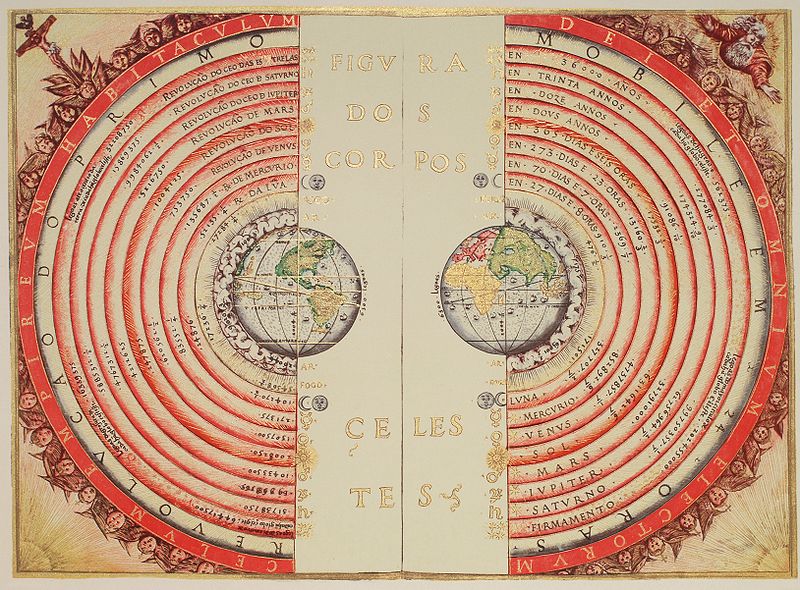
Click image to enlarge it.
This latest measure by Wiley-Blackwell recalls the Ptolemaic geocentric model in which the heavenly object orbit the earth. This model was propped up over time by the addition of explanatory epicycle after epicycle, until the unwieldy structure simply toppled in the face of the straightforward heliocentric system, first advanced by Copernicus. So, too, publisher-centric intellectual-property acrobatics will also pass. But how many more epicycles will it take? Well, one more caught my eye within Wiley-Blackwell’s copyright terms for off-prints.
Not so long ago, publishers would send authors a set of fine off-prints for sharing with students, colleagues, and those who requested a copy, often using preprinted postcards that often carried exotic stamps. Today, authors publishing with Wiley-Blackwell can share no more than the final draft of their article, which, if it can be cited, cannot be reliably quoted.
I am left, then, with this question of how many more epicycles will it take before the larger academic community recognizes that the earth is turning, and that such turning accounts for the spread of light across the land.

Under the open access philosophy, Redalyc looks forward to contribute to the scientific editorial work produced in and about Iberoamerica, making available for the students and researchers the content of more then 550 magazines from different knowledge areas