

Google and Universal Search

“We want to help you find the very best answer, even if you don’t know where to look.”
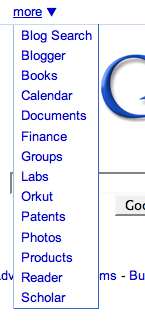 Sounds like something a librarian might say. But it’s Marissa Mayer, a Google V.P., talking about that fact that Google’s many search options — news, video, images, blogs, etc. — might be confusing for people. Last week Google announced it was initiating “universal search,” the aim being to “blend content from Images, Maps, Books, Video, and News into our web results.”
Some searches throw up images or videos, others yield news reports, in addition to the usual mound of web page results. And with some searches a list of available “facets” appears at the top of results. Thus a search for apple computer tells me that there are clusters of results available in video, news, patents, and products realms as well.
This may not appear to be a radical development from a user’s perspective — and perhaps not something that Slawyers, who are all superior searchers, will get at all excited about — but it has clearly taken some doing behind the scenes to manipulate the various search algorithms controlling results for the various types of materials.
Anyone wanting to learn more about this development must consult an excellent article, Google 2.0: Google Universal Search, on Search Engine Land. It’s an illustrated guide into the heart of Google searching that would repay reading by even the most skilled researchers.
Interesting, isn’t it, how in attempting to swim in the flood of information washing over us, we (Google) rock back and forth between “folksonomy” (search on any word ever used by anyone — a sort of universal tagging) and a more formal, albeit loose, taxonomy (web, patent, products, video, etc.). Google starts out all full text search, introduces categories, then blends them back into “unorganized” search…

Comments are closed.