

A Futile Search for “Truth”? Epistemically Unproductive Expenditures in Civil Lawsuits

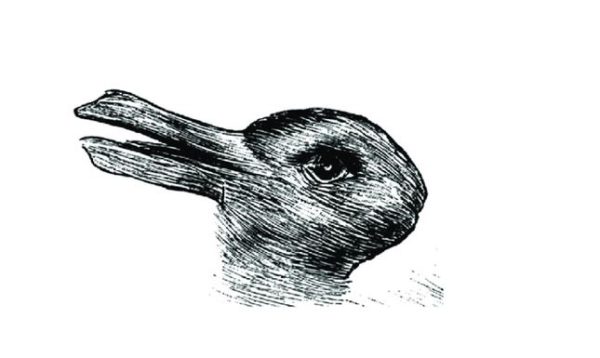
Is this a rabbit, or is it a duck? It’s both. (You’ll see the two animals after a few seconds if you haven’t already). Known as Jastrow’s rabbit/duck, this image has been amusing people ever since it first appeared in a German newspaper in 1892).
How much time and money should be spent trying to prove that Jastrow’s drawing is really a duck, or really a rabbit, or more one than the other? No time and no money at all.
Our civil justice system tries to search for truth, in order to bring each lawsuit to a just resolution on the merits. But how much time and money are spent searching for “truth” about questions which, like the rabbit/duck picture, have no truth that can be found?
The system should try to prevent public and private money being spent on evidence or advocacy that is predictably epistemically unproductive – unable to advance true knowledge.
The “Truth” about the Plaintiff’s Health
In many civil lawsuits, the primary dispute is about how injured or incapacitated the plaintiff really is. What amount of money would put them in the position they would have been in, had their injury or condition never arisen? Some numbers are certainly wrong because they are too low, others because they are too high. However, plaintiff and defendant often agree quickly that something will be paid by the defendant, and that the amount will be within a certain range.
After this point, they may spend tens of thousands of dollars on legal fees and expert evidence trying to persuade each other, and if necessary a judge and/or jury, that the correct number within the range is higher or lower.
The range in a garden variety case might run from a low number (if, as the defendant says, the plaintiff can soon get back to work) up to a much higher number (if, as the plaintiff says, they are experiencing debilitating pain that prevents ever returning to their old job).
Within this range, no number might be more correct than any other. The first problem is that pain is a subjective experience; no one else can know how the plaintiff “really feels,” and the plaintiff has an incentive to misrepresent it. The second problem is that, even if truth exists about whether the plaintiff will suffer debilitating pain 10 years from now, that truth may be inherently unknowable today.
It would follow that, even with godlike perceptiveness and unlimited evidence, a factfinder might have no hope of finding the true number, within the range. That fact should cap the time and money spent trying to better inform the factfinder.
The “Truth” about Negligence?
In other cases, experts are retained to opine about whether imperfect work fell below the standard of care. For example, in Vermilion v Binder, problems emerged with the flooring in a building that the defendants had constructed for the plaintiff. Water was getting in, and clearly the design and construction could have been better, but various other things went wrong that were not the defendants’ fault. Did their work fall below the standard of “reasonable care and skill?” The parties found and paid at least nine experts to testify “yes” and “no” in this case.
When vague legal standards such as “reasonableness” are applied to complex and idiosyncratic fact patterns, causing well-qualified and honest experts to disagree, it is possible that neither outcome on liability (negligent or not) is more “true” than the other.
Legal Ethics vs the Search for Truth
Do large sums of your client’s money hinge on questions such as personal injury damages or professional negligence? If so, your duty of commitment to the client’s cause might call you to recommend continuing investments of time and money into the case, so long as the expected payoff of the investments (for your client) exceeds their expected cost.
But just because paying a crackerjack expert to testify is likely to sway a jury doesn’t mean that the money will really advance the search for truth to which the civil litigation system is, in principle, dedicated. If large sums depended on convincing impartial observers that Jastrow’s drawing is really a rabbit or really a duck, then large sums of money would be invested to do so. And yet the expenditures would still be wasted.
Facts: Knowable and Unknowable
Radical scepticism holds that objective truth either doesn’t exist at all, or can’t be perceived by humans. That seems a step too far. Some facts investigated by the justice system – e.g. the defendant’s rate of speed just before the collision, or how much alcohol they consumed – do have precise right answers. On such questions, spending time and money searching for truth– with expert evidence or legal advocacy – can pay off with more substantively just outcomes.
However, some other questions, which add a lot of time and money to an already expensive and lengthy process, seem to basically be Jastrow rabbit/ducks.
The civil justice system probably can’t avoid having to label “ducks” and “rabbits.” It has to fix damages in personal injury cases and decide who was and wasn’t negligent. But it can limit the time and money spent by parties and the Court on epistemically unproductive evidence and advocacy.
Compensating for personal injuries, and pondering the reasonableness of professional judgment calls, seem a lot more important than trying to identify Jastrow’s animal. But the sensible course may be the same: move on to more productive inquiries, before much time or treasure is spent.

Start the discussion!