

A Victim’s Criminal Justice Journey: The Value of Visual Mapping

Over the past few years, I’ve delivered presentations to legal groups and member organizations focussed on “Journey Mapping”.[1] Journey Mapping is the visual representation of an individual’s journey through a process that happens over time. It is a collection of touchpoints from the beginning to the end looking at the individual’s experience, the stages in a process, the actors and emotions. It sounds like a simple concept, right? But, what is most complex is trying to explain the value of Journey Mapping in the law, because there is exceptional value, and you only have to see it to see the value.
With her co-authors, Sofie-Amalie Torp Dideriksen,[2] a PhD candidate at the AI Futures lab at the Industrial Design Faculty, Human-Centred Design Department with TU Delft University, mapped out a victim’s journey, power and experience in the Dutch Criminal Justice System (“CJS”) in her article, “En route without a steering wheel – a victim-centred mapping of power in the criminal justice system” (“En route article”).[3] The En route article is an exploratory study that took place over an 8-month period of which nearly 2-months of analysis was needed to form the conclusions in the article and produce the victim’s Journey Map. This piece was first published in the Legal Design Journal, an academic journal that connects academics and practitioners of legal design.[4]
Dideriksen and her co-authors, Dave Murray-Rust, Froukje Sleeswijk Visser and Pieter Jan Stappers pondered whether technology could assist victims of sexual violence. By combining design research theory and feminist literature, they looked at how power was organized in the Dutch CJS. The authors sought to tackle:
- a victim’s journey in the CJS
- the victim’s power in the CJS
- the victim’s experience power in the CJS
As many of us know, the CJS is complex and intricate involving many actors and stakeholders like police, prosecutors, the court (and judge), and the institutions for sentencing (prisons), each with a different responsibilities to report, investigate, prosecute and sentence a criminal matter.[5] Once, the objectives had been defined, the authors had to figure out how to tackle the complexities of the CJS. The use of Journey Mapping helped the authors to identify a larger pattern of power and control.
The Benefits of Journey Mapping
Journey Mapping is part of the design thinking methodology and yes, we can (and should) use it in legal processes. Mapping out an individual’s experience helps us reflect on how that process can be improved. We can see:
- where the process is flawed and does not always help the ‘user’
- how the design of the system supports the system, business, Court, etc. before the person (or persons) who will use that thing
- how to simplify and create efficiencies
Mapping out legal processes using the design thinking methodology (aka legal design) is a logical way to first approach any flaws that might exist. There are many ways to start mapping out these processes. One way to do so is through industry expert-interviews.
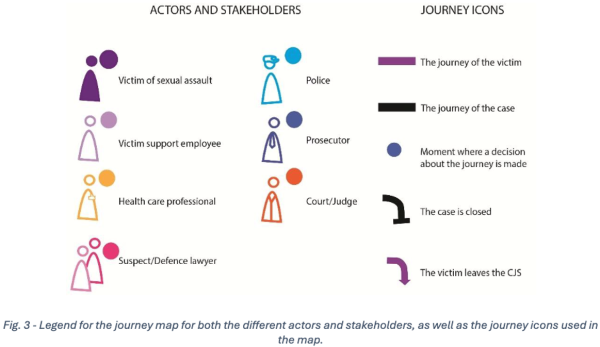
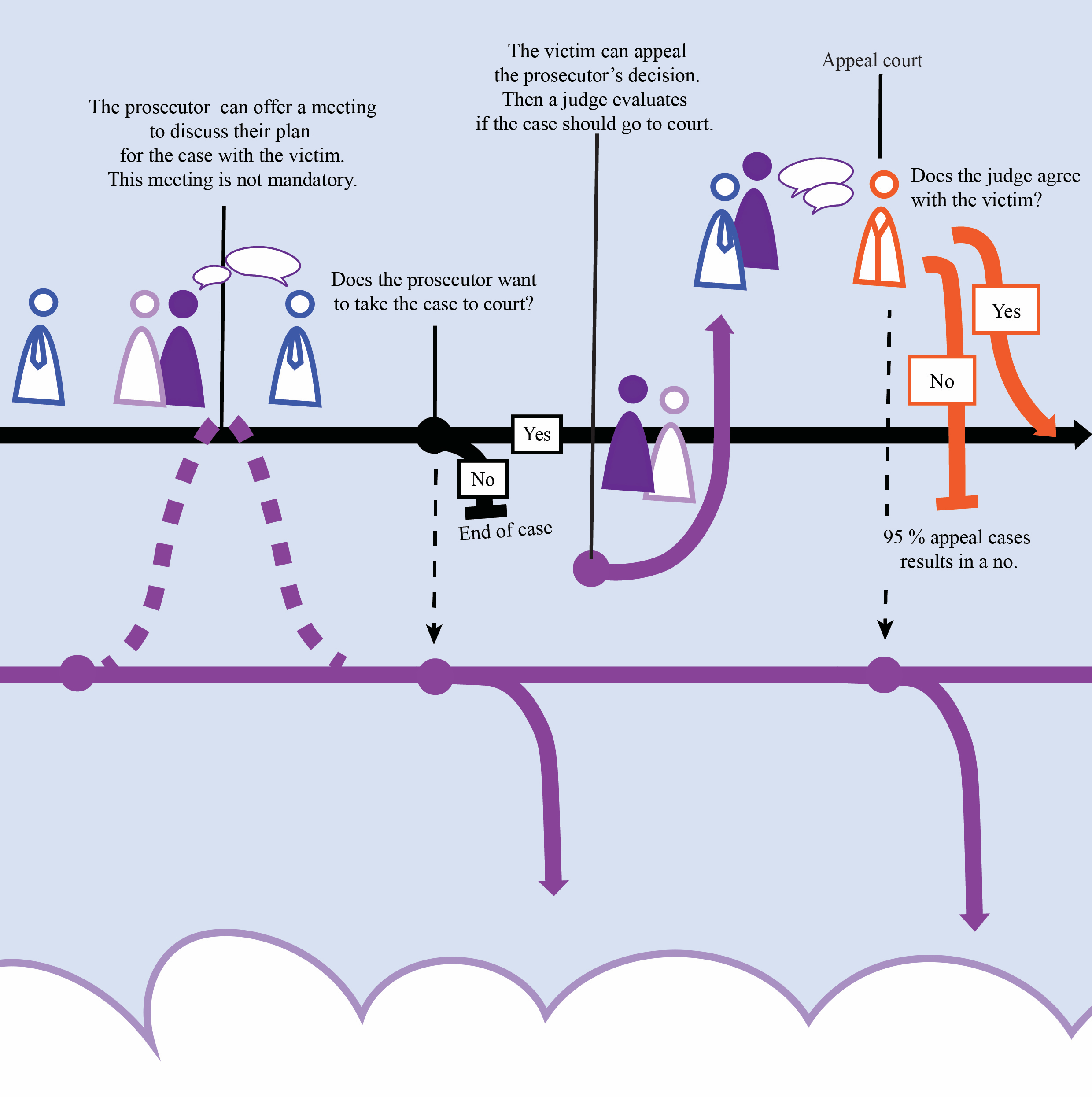
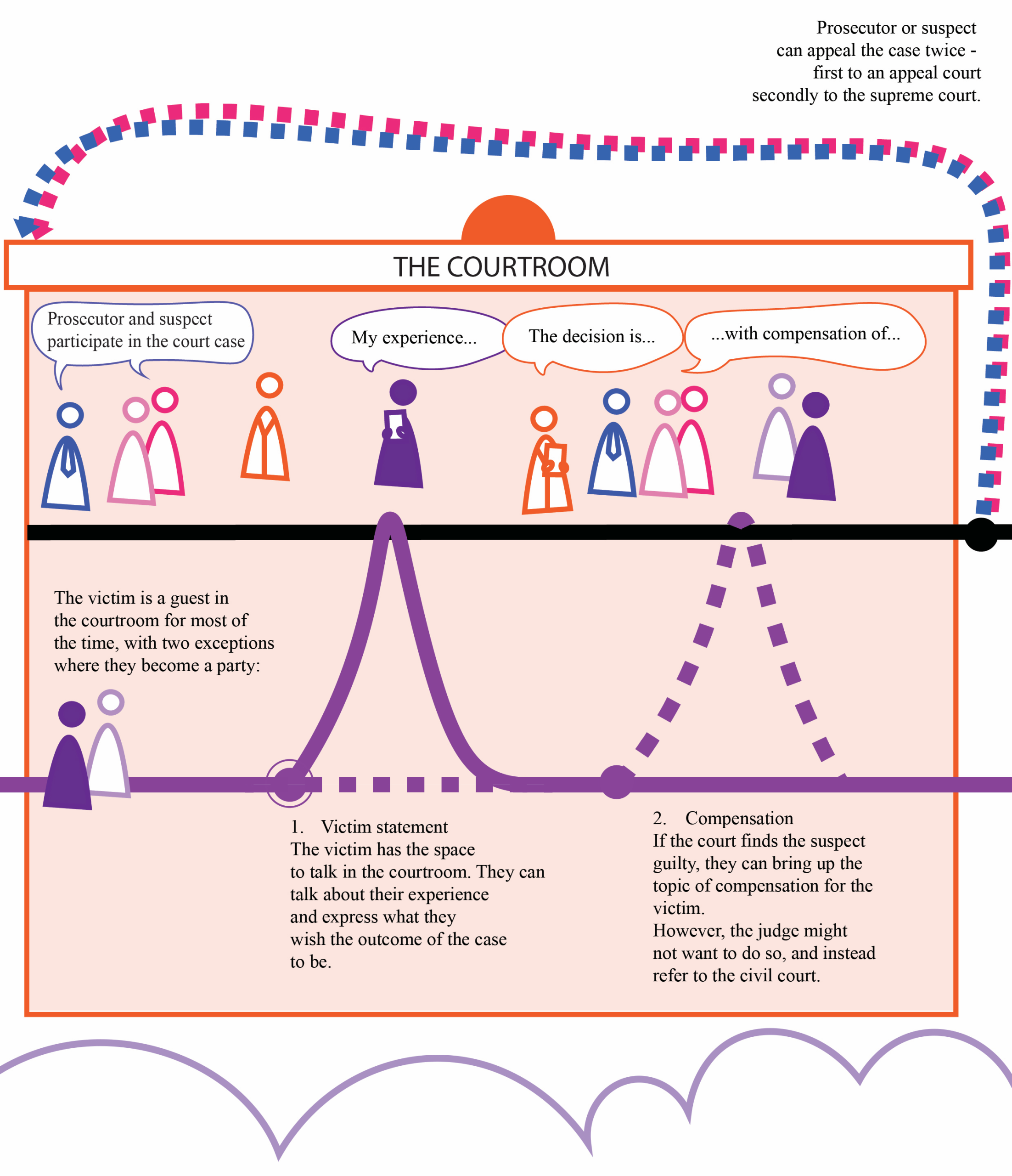
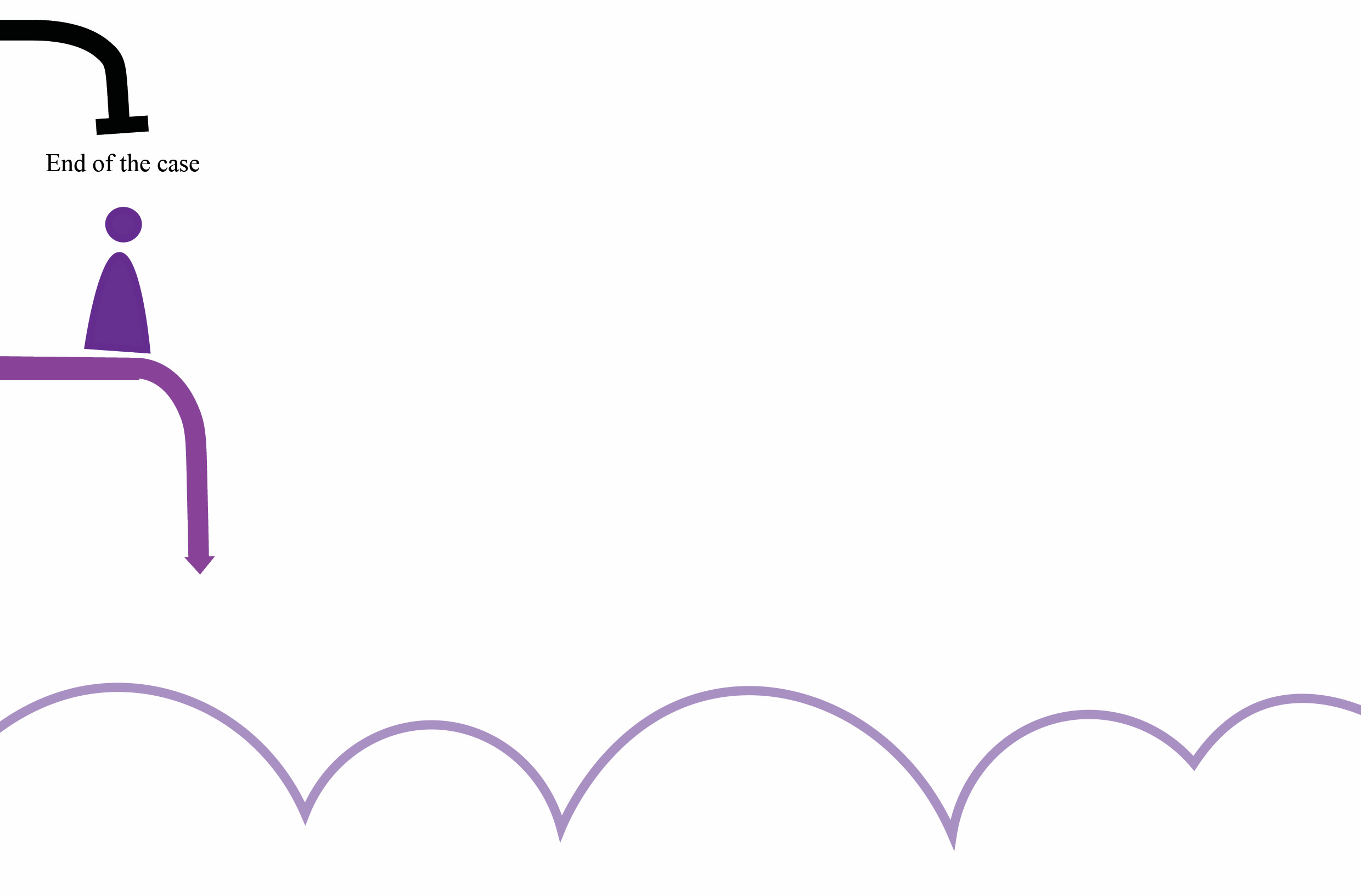
In the En Route article, most of the data collected for the Journey Map came from user-interviews with the police and prosecutors. These interviews helped the authors to identify how processes in practice differed from official descriptions. The victim’s experience was then divided into three chapters: The police (blue), prosecutor (purple), and the court (orange). Each of the chapters have “moments” that include all interactions with the victim. Here’s the Journey Map. First, familiarize yourself with the ‘Actors and Stakeholders’ and ‘Journey Icons’, then take a closer look:[6]
Full Journey Map
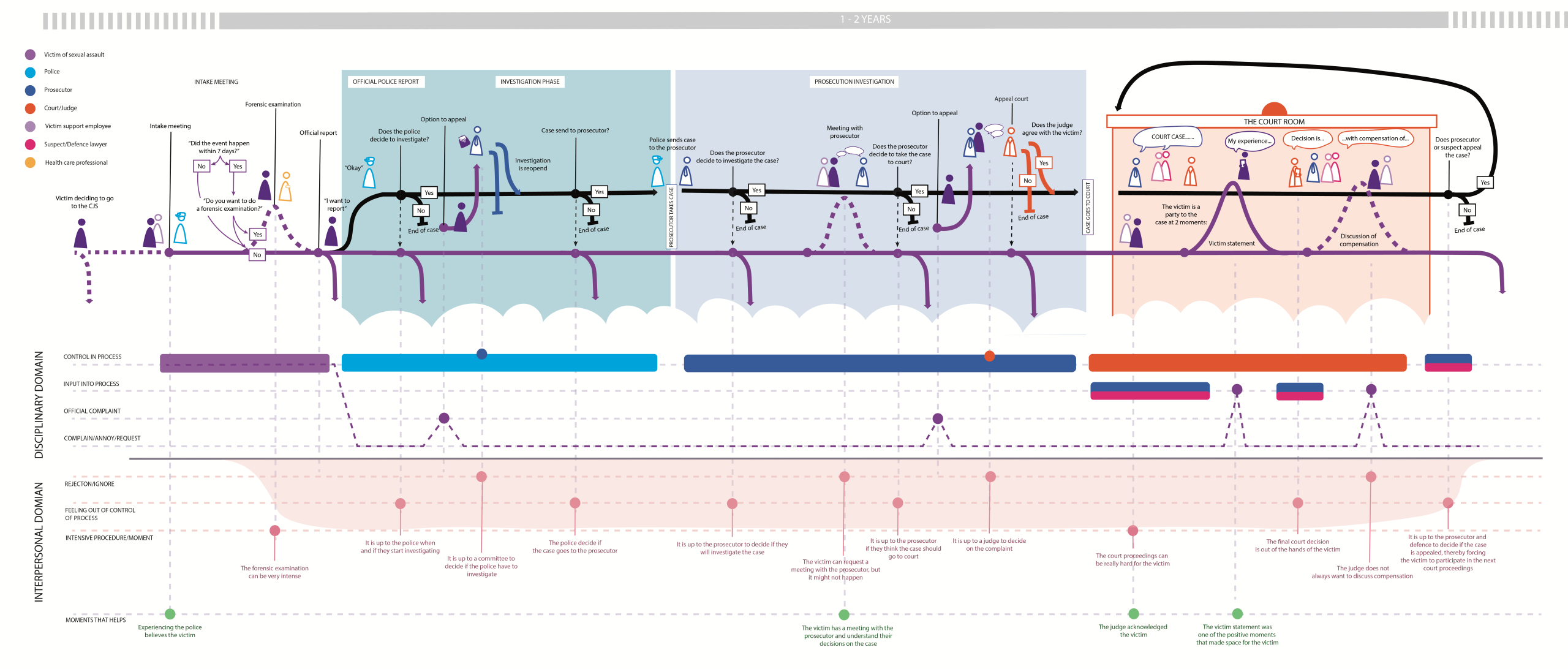
[Click on the image above to view the Full Journey Map in your browser.]
Journey Map Slides
Reporting Incident, Police
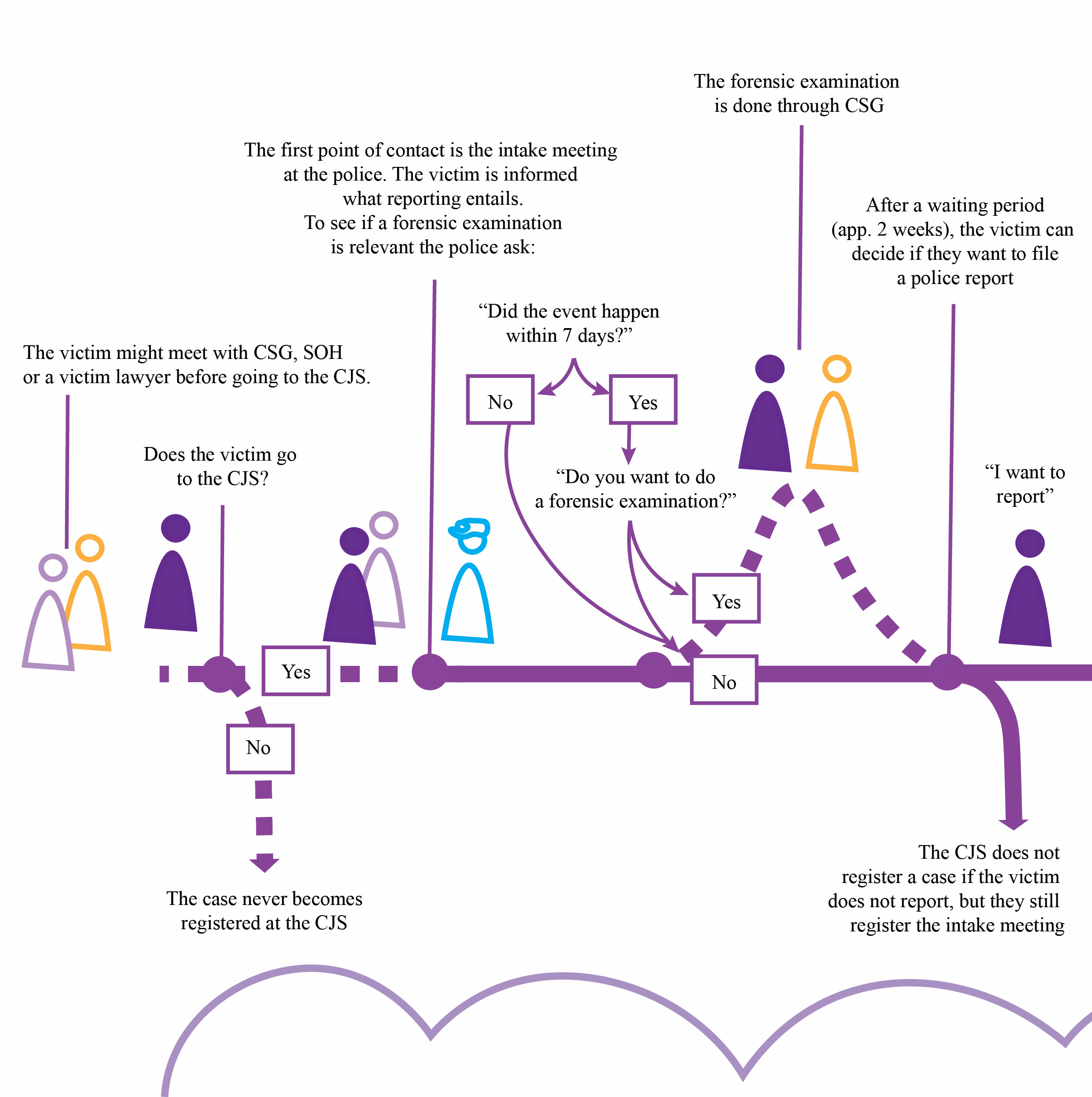
Bringing Charges, Police and Prosecutors
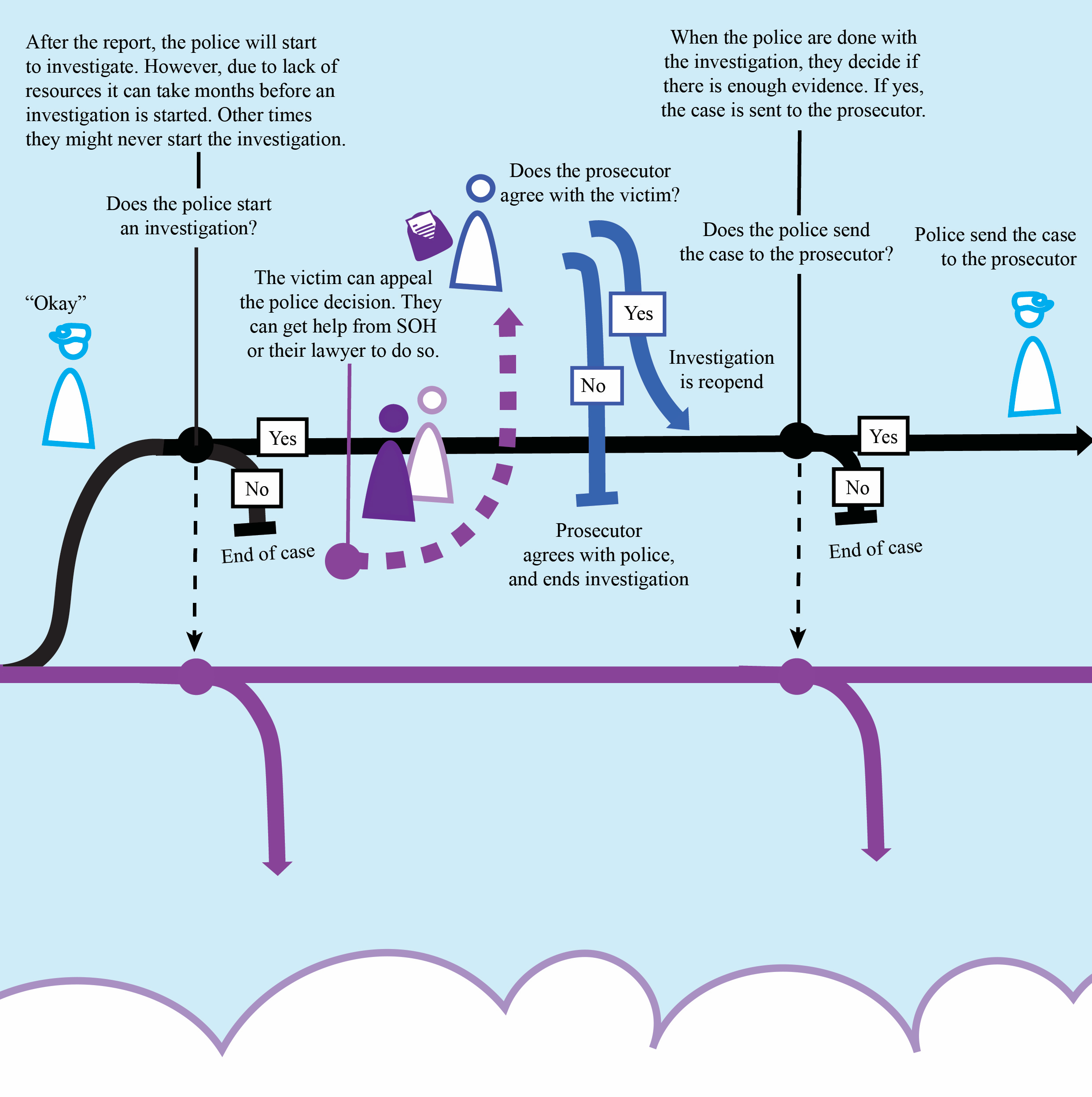
The Prosecutor
The Courtroom
En route article Conclusions
Once the victim’s journey was mapped out in the CJS, Dideriksen analyzed the journey using feminist theory, exploring specifically what power the victim had. That was when she had an “ah-ha” moment and discovered a few things: that the victim has very little agency in the CJS; there are strong power dynamics at play in the CJS; that ‘choice’ only existed at the very start of a victim’s journey in a justice system (i.e. when deciding to proceed with the case); once victims make the decision to report a sexual assault, control is lost quickly and immediately in the CJS; at some moments, the victim has little say in the CJS; however, there were moments that the victim has agency in the CJS (i.e. the ‘victim impact statement’).
After all of their research and analysis, Dideriksen and her co-authors felt confident in their choice of method to help show the lack of power for victims – visually. Journey Mapping became a tool to not just visualize a journey, but to highlight its systemic issues as well as possibility. What they saw was that even small moments have the potential for big impact. At the end of it all, their ultimate conclusion still stands: agency does matter.
Conclusion
Not every Journey Map needs 8-months and academic research, but this is a perfect example of how Journey Mapping in the law can help us visually see the gaps in a legal process. By following the victim’s journey from reporting, police investigation, prosecution and trial, we can also quickly identify a victim’s journey in the Dutch CJS and the similarities with the Canadian CJS.
What did you notice when you looked at Dideriksen’s Journey Map? Let us know by leaving your comments.
_________________________
[1] See: Salata, K., “Designing for Resolution: The Role of UX in Mediation” (Presentation to ADR Institute of Ontario, 25 October 2025), online: https://www.linkedin.com/posts/kerrisalata_designingthelaw-mediationanddesign-adranddesign-ugcPost-7387503376223358978-ybiG/ ); Salata, K. and Carbonelli, L., “Transforming Compliance: From Barrier to Bridge” (Lecture delivered to the Society of Corporate Compliance Experts, 20 September 2025), blog online: https://www.linkedin.com/posts/kerrisalata_scce-scce-sccecei-activity-7241830389655244803-RGhw; Salata, K., “Using Design Thinking to Solve Real-World Problems: My Experience Teaching Design Thinking to the OLG’s Governance, Legal & Compliance Group” (Presentation Series delivered to Ontario Lottery and Gaming Corporation (OLG), Fall 2025), blog online: https://kerriasalata.com/using-design-thinking-to-solve-real-world-problems-my-experience-teaching-design-thinking-to-the-olgs-governance-legal-compliance-group/ .
[2] Dideriksen is a PhD candidate at the AI Futures lab at the Industrial Design Faculty, Human-Centred Design Department with TU Delft University, whose academic focus is on using technology, like Artificial Intelligence, to support victims in the criminal justice system.
[3] Dideriksen, S. et al., “En route without a steering wheel – a victim-centred mapping of power in the criminal justice system,” 2: 1 Legal Design Journal 2025, online: https://ojs.library.lancs.ac.uk/ldj/article/view/165 (“En route article”).
[4] For more information about the Legal Design Journal, refer to: Salata, K., “The Second Voyage: Explore the World’s First Legal Design Journal” (SLAW, 12 December 2025), online: https://www.slaw.ca/2025/12/12/the-second-voyage-explore-the-worlds-first-legal-design-journal/.
[5] Ibid En route Article, p. 4.
[6] Ibid: Image reproduced with permission from the Authors. This Journey Map is read from left to right, following the victim and their interactions with other actors. Actors are colour-coded. The police (blue), prosecutor (purple), and the court (orange). Purple is the victim’s journey. Black is the journey of the case.

Start the discussion!